


Some of the Books Behind Kailum Boone
Books from every genre have shaped me as a person and as a writer. Some inspired the survival elements in Kailum Boone, while others opened doors into cosmic mystery, hidden dimensions, ancient forces, and the possibility that the universe is far stranger than we imagine.
These stories also reminded me that none of us is perfect. We fail, grow, change, hurt others, forgive ourselves, and keep becoming. Even in a galaxy where three teenagers may be destined to save their world, the heart of the story is still about discovering who you were always meant to be.
Here are a few of the influential books that helped shape me, awakened my imagination, and guided me toward writing the story of Kailum Boone.
My Side of the Mountain — Jean Craighead George
I would gladly recommend this book to any young reader who has ever wondered what it would be like to step away from the noise of the world and test themselves. Sam Gribley’s quiet courage, resourcefulness, and independence stayed with me for years, and helped inspire the development of Kailum Boone — a boy learning that survival is not only about staying alive, but discovering who you are when the familiar world falls away.
Winter of the White Seal — Marie Herbert
Another great read from my childhood that has stayed with me forever. I would gladly recommend this book to any young reader who enjoys stories of survival, resilience, and ordinary people facing extraordinary circumstances. The young protagonist’s struggle to endure isolation, danger, and difficult moral choices stayed with me long after I finished the book, and helped shape my fascination with characters like Kailum, Auren and Tarak — young people who discover that courage is not the absence of fear, but the decision to keep moving forward despite it.
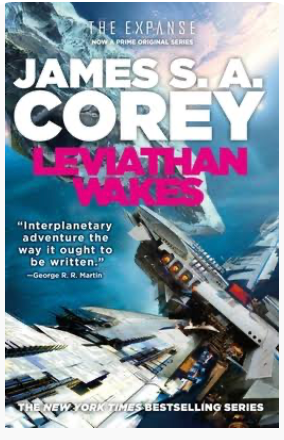
Leviathan Wakes — James S. A. Corey
I would gladly recommend Leviathan Wakes to readers who enjoy science fiction that feels gritty, intelligent, and lived-in — and I would recommend it to writers for the same reason. It is a wonderful example of world-building, not as something to copy, but as something to study: the nuances of ordinary life, working people, politics, markets, tensions, histories, and daily routines unfolding beneath extraordinary events. That was something I wanted Zorhros to have from the very beginning.
Clan of the Cave Bear — Jean M Auel
Clan of the Cave Bear is a classic that has stayed with me for years. What is remarkable is that many of this authors imagined ideas about Neanderthals were later supported by science, which makes the book feel even more impressive in hindsight. I would recommend it to readers who enjoy survival stories about harsh worlds, complicated belonging, and characters learning to live between cultures.
Ayla’s resilience, intelligence, and courage helped shape the way I thought about my own resourceful character, Auren Tahlor — a young person trying to survive an unforgiving world while slowly discovering who she is meant to become.

The Autobiography of Benjamin Franklin
If you have ever doubted yourself, felt lost, or wondered where your life is heading, I would recommend The Autobiography of Benjamin Franklin. Reading about Franklin’s early teenage years makes you think twice about dismissing your own abilities or talents. Who would have guessed that this restless, imperfect young man would grow up to help shape a new country?
What stayed with me most was Franklin’s restless mind — his failures, ambition, relationships, and constant reinvention — all of which helped shape the way I think about character growth in Kailum Boone.
The Lord of the Rings — J.R.R. Tolkien
Once again, this is a classic for any teen who loves adventure — but especially for anyone who has ever wondered what it feels like to be called into something bigger than yourself when staying home would be so much easier. Sometimes a mission finds us long before we feel ready for it.
That idea matters deeply in my book. Kailum, Auren, and Tarak all had real lives before the adventure pulled them in — work, friendships, family, dreams, and even love interests still waiting to be understood.
Tolkien shows us that a great story is not only about saving the world, but about the people trying to live inside that world while the darkness grows around them. That sense of myth, friendship, place, and impossible hope helps all of us move beyond comfort and toward more authentic lives.

Harry Potter Series — J.K. Rowling
Yes — I think it is fair to call Harry Potter a modern classic.
Harry Potter has shown an entire generation what it means to live by your morals and persevere under enormous odds. It is not always easy to listen to your inner voice when the world is crumbling around you. Once again, I may sound like a broken record, but I would recommend Harry Potter to teen readers who enjoy stories about friendship, mystery, courage, and finding a place where they belong.
For me, the heart of the series was always the idea that ordinary young people — messy, funny, loyal, frightened, and brave — could face extraordinary darkness and still hold on to who they are. That sense of friendship, chosen family, and growing up under impossible pressure is something we all long for. I would have loved to grow up with such close friends, and that desire helped shape the emotional core between Auren, Tarak, and Kailum.
The Bible — The Bible is a remarkable resource for readers and writers, while also carrying painful associations for those who have seen it misused to exclude or harm. Beyond that misuse, it contains some of humanity’s oldest stories of survival, exile, courage, redemption, and hope — from Jonah confronting fear and purpose inside the belly of a great fish to Moses, rescued as an infant and later called into an impossible destiny.
Whether read as spiritual text, history, or story, those ancient journeys helped shape my appreciation for mythic storytelling and influenced themes in Kailum Boone: ordinary people facing extraordinary callings, difficult choices, and destinies larger than themselves.
The Future of Humanity — Michio Kaku
Some of these books written buy this author may sound heavy, but trust me — they are more accessible than they seem. I gladly recommend The Future of Humanity to readers and writers interested in where our species may be headed: other worlds, advanced technology, planetary survival, and our long journey into the stars.
For me, it was a masterclass in large-scale world-building. It helped me think beyond one planet and imagine how civilizations might evolve, adapt, and survive across time and space — ideas that helped shape the cosmic wonder beneath Kailum Boone.
Physics of the Future — Michio Kaku
In these pages Kaku shows how physics can give credibility to a time and place — even when a writer takes creative liberties. After all, many things once considered magic are now understood as science.
The book helped me think beyond spaceships and gadgets and imagine how future societies might actually function: communication, transportation, energy, medicine, and culture. That thinking helped shape the lived-in world of Zorhros and the technology woven throughout Kailum’s world. I did not need to write a detailed manual for building and opperating Kailum’s 'skiv', but by borrowing a few ideas from physics and bending them to fit the story, the hover-board could feel both believable and exciting — the kind of invention readers might wish existed now. And who knows? Maybe one day it will, perhaps because someone reading this book decides to build it.


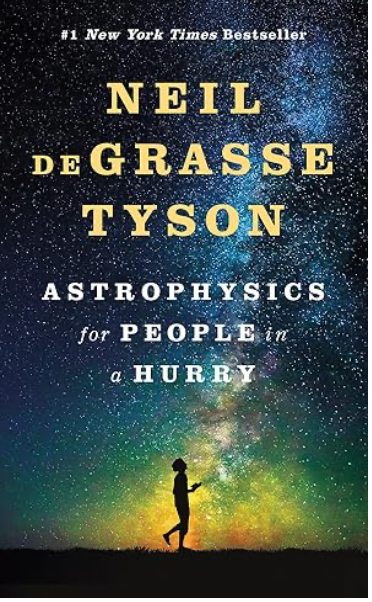
Astrophysics for People in a Hurry — Neil deGrasse Tyson
is a great recommendation for readers and writers who want the universe to feel less distant and more astonishing. Tyson has a gift for making enormous ideas — stars, galaxies, gravity, dark matter, and our place in the cosmos — feel understandable without losing their wonder.
For me, the book helped reinforce the sense that we are part of something far larger than ourselves. That perspective shaped the cosmic mystery beneath Kailum Boone — the idea that ancient forces, hidden truths, and ordinary lives may all be connected in ways we do not yet understand.
Human Universe — Brian Cox
In Human Universe, Brian Cox explores one of the biggest questions of all: how humanity fits into the vast story of the cosmos. I would recommend it to readers and writers who enjoy stepping back from daily life and asking the larger questions: Why are we here? What does it mean to be human? Do our choices matter in a universe this old and enormous?
What stayed with me was the idea that we are both incredibly small and deeply significant at the same time. That sense of scale helped shape the wonder beneath Kailum Boone — the feeling that even in an immense and ancient universe, individual lives, choices, friendships, and acts of courage still matter.
Kailum is not the loudest person among his friends, or the most outgoing. But when someone needs help — whether they deserve it or not — Kailum shows up. So even in a heady book like Human Universe, inspiration can inspire character development between the lines.

The Fabric of the Cosmos — Brian Greene
Brian Greene’s The Fabric of the Cosmos explores the deep structure of reality — space, time, dimensions, and the possibility that the universe is far stranger than our everyday experience suggests. What stayed with me was the idea that reality may have hidden architecture beneath what we can see: unseen rules, invisible forces, and layers of existence waiting to be understood.
That sense of mystery helped shape the ancient forces, buried truths, and dimensional questions woven throughout Kailum Boone — including the Brain’s relentless quest to uncover, consume, and control the hidden systems beneath reality itself.
Veronica — Roger Duvoisin
This one may surprise anyone who considers themselves a “serious” reader or writer, but I include it unapologetically.
Veronica was my very first book, and I think it planted a seed I did not recognize until years later.
Veronica is a hippopotamus who wants to be seen, so she leaves the safety of the riverbank and steps into a world that was not built for her. What follows is funny, awkward, messy, and strangely touching — because every young reader understands the desire to stand out and belong at the same time.
In a surprising way, Veronica’s journey echoes through Kailum Boone. Kailum, Auren, and Tarak all step beyond the places that once defined them and discover that being different is not something to hide or apologize for. Sometimes the very thing that makes you feel out of place becomes the beginning of your story — and the first brave step toward being truly seen and being authentically you.
